Mental enrichment: the new default for dog owners
A tired dog isn't just a walked dog anymore. Here's what mental enrichment actually means, and three easy ways to add it to a normal week.
For a long time, "tired dog" meant "walked dog." That's still true, but it's incomplete: a dog can be physically exhausted and still bored, and a bored dog is usually the one chewing the sofa leg or barking at nothing. Mental enrichment is the missing half — giving a dog's brain something to work on, not just its legs.
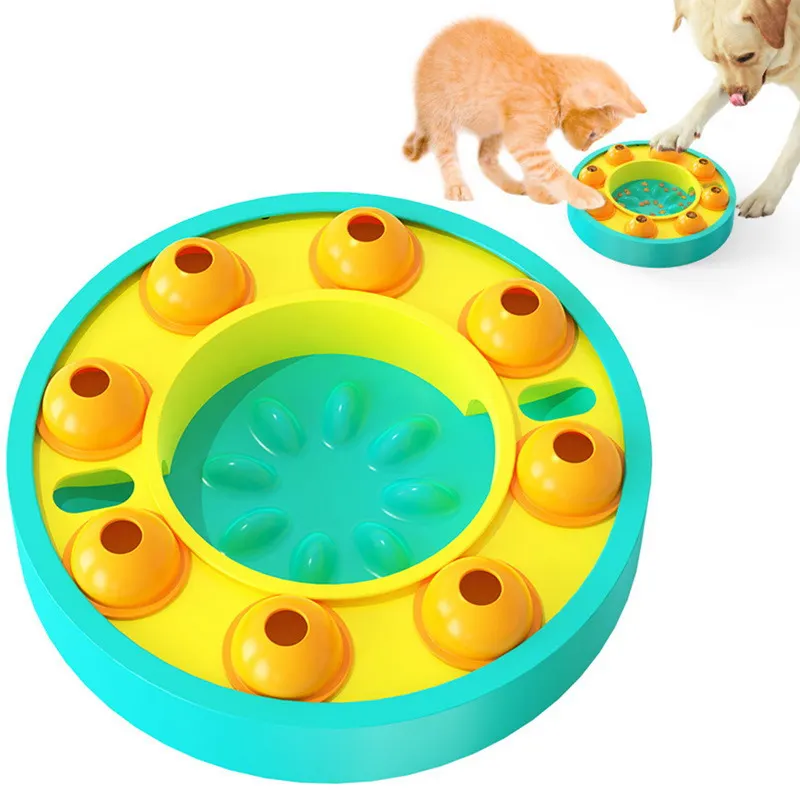
It doesn't need to be complicated. A slow feeder that makes a dog work around raised ridges instead of inhaling dinner in four seconds is enrichment. A snuffle toy that hides kibble in fabric folds and makes a dog forage for it, the way scent-driven animals are built to, is enrichment. Even a puzzle feeder that turns a normal meal into a fifteen-minute project counts — the goal is engagement, not exhaustion.
The dogs that benefit most obviously are the ones with energy and no job: working breeds in an apartment, young dogs between walks, anxious dogs left alone during the day. But every dog's day gets calmer with something to focus on beyond "wait for the next walk."
A realistic way to start: pick one meal a day and serve it through a slow feeder or snuffle mat instead of a bowl. That's it. No new routine to build, no extra time carved out — just turning a meal that already happens into ten minutes of something more interesting than four seconds of nothing.
It's worth separating enrichment from simply owning more toys. A basket overflowing with things a dog has stopped noticing isn't enrichment, it's clutter — dogs habituate to a toy that never changes or disappears, the same way a person stops seeing a picture that's hung on the same wall for years. Rotating three or four toys in and out of sight on a weekly basis keeps each one interesting for longer than leaving all of them out permanently ever would.
Scent work deserves its own mention, because it's the one form of enrichment that costs nothing and uses a sense dogs rely on far more than sight. A dog's nose has roughly forty times more scent receptors than a person's, which is a large part of why a five-minute walk spent sniffing every post and blade of grass can be more mentally tiring than a twenty-minute walk at a fast pace with no stopping. Letting a dog set the pace on part of a walk, rather than hurrying it past every smell, is enrichment that happens without buying anything at all.
A dog that's chronically under-stimulated doesn't always look bored in an obvious way. Excessive licking, barking at things that were never a problem before, and a dog that seems to need constant physical activity just to feel settled are all things worth reading as a request for more mental work, not just more miles. It's not a diagnosis — a vet should rule out anything medical first — but it's a pattern worth noticing before assuming a dog just needs to run further.